Oxygen sensor
One of the key sensors in this system is the oxygen sensor. It’s often referred to as the “O2” sensor because O2 is the chemical formula for oxygen (oxygen atoms always travel in pairs, never alone).
An oxygen sensor is a small device located in your vehicle’s exhaust system. Its shape and size resemble that of a spark plug. The role of the oxygen sensor is to monitor the amount of oxygen in the exhaust.
The oxygen sensor works by sending information to your vehicle’s engine control unit (ECU) to help your car run efficiently as well as to reduce emissions.

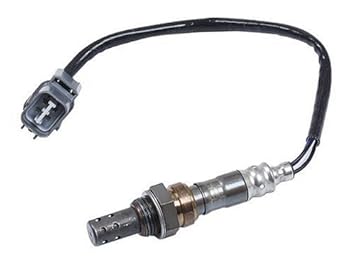
Image source: RepairPal & Amazon
- Check engine light on
- A rotten egg odor emitting from the exhaust.
- A reduction in fuel economy. Your catalytic converter fails unexpectedly.
- Exhaust emissions reach undesirable levels.
- Your engine surges, hesitates, skips and bucks.
- Over time, an oxygen sensor may become caked with byproducts of combustion, such as sulfur, lead, fuel additives, oil ash, etc. This contamination causes the sensor to lose its ability to produce voltage and send the right signal.
- Using fuel that is not recommended for your vehicle.
- Using low-quality gasoline may also speed up the oxygen sensor failure.
- Skipping maintenance, especially things like timely spark plug and air filter replacement.
- The oxygen sensor in modern cars can last up to 100K miles, but typically you would experience problems sooner than that.
- The unheated 1 or 2 wire O2 sensors, used in vehicles from mid-1970s through early 1990s, replace every 40,000 to 50,000 miles.
- Heated 3 and 4 wire O2 sensors, used in the vehicles from mid-1980s through mid-1990s, replace every 60,000 to 70,000 miles.
- Newer vehicles made in mid-1990s and later, replace the oxygen sensors every 100,000 miles.