Torque converter
Torque converter problems are sometimes misinterpreted as symptoms of a failing transmission.
In a nutshell, a torque converter is a fluid coupling that transfers torque from the engine to the transmission. It is mounted between the engine and transmission, bolted directly to a ‘flex plate’ which is spun by the crankshaft.
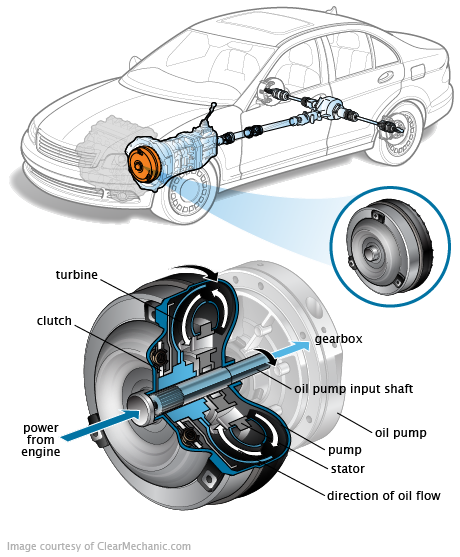
- Transmission to delay a shift, or slip out of gear.
- Overheating – Low fluid levels or a malfunctioning solenoid can also cause a transmission to overheat.
- When driving at a lower speed, around 30 to 45 miles per hour, you may feel a shudder, as if you’re driving over bumps.
- Strange sounds – Any foreign sounds such as clicking or a revving noise
- Your car doesn’t accelerate properly
- Illumination of the Check Engine Light
- Engine stalling
- Clanking or rattling type noise as engine speed changes
- Abnormal vibration
- Lack of power
- Transmission fluid leak
- Abnormal noise when the starter is engaged
- However, diagnosing the cause of a transmission issue isn’t easy. In many cases, the torque converter will not actually be the source of the problem (you might just have a fluid leak!).
- Bad torque converter needle bearings
- Damaged torque converter seals
- Worn Torque Converter Clutch – Automatic transmissions have a number of clutches located throughout the assembly.
- In addition to transferring the power from the engine to the driveline, the torque convertor will “slip” at idle, allowing the engine to remain running while the drive wheels are stopped
- To increase fuel economy, all modern vehicles have an electronically controlled clutch inside the torque convertor which “locks” the torque converter at freeway speeds, eliminating any internal slippage
- If the torque converter clutch does not disengage at idle, the engine may stall
- Simply draining the transmission, or removing the pan and filter, does not drain the old fluid from the torque convertor. A fluid exchange procedure must be performed to remove and replace all of the fluid in the transmission, torque convertor, and cooler system.
- The torque convertor should be replaced when the transmission is overhauled or replaced